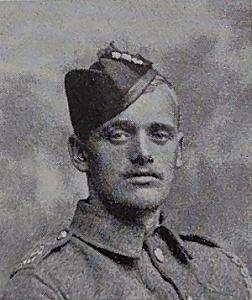
The Battle of Albert
Description
The Battle of Albert (1–13 July 1916)
Overview:
The Battle of Albert was the opening phase of the larger Battle of the Somme, fought during World War I on the Western Front in France. It marked the initial assault by British and French forces aimed at gaining ground against German defenses.
Battle Objectives:
Break through German lines: The primary goal was to inflict significant casualties on German forces and breach their defensive positions.
Relieve pressure on Verdun: By opening a new front, the Allies sought to divert German resources from the Battle of Verdun.
Capture key positions: Specifically, the villages around Albert and the surrounding trenches to advance the front line.
Key Participants:
Allied Forces:
British Expeditionary Force (BEF), commanded by General Sir Douglas Haig
French Sixth Army, commanded by General Émile Fayolle
German Forces:
German 2nd Army, commanded by General Fritz von Below and General Max von Gallwitz
Tactics Employed:
Preparatory Bombardment: Intense artillery fire targeted German trenches and defences to destroy barbed wire and weaken fortifications.
Creeping barrage: Artillery fire moved forward in stages just ahead of advancing infantry to protect them from German machine-gun fire.
Infantry Assaults: Infiltration tactics were initially attempted but largely traditional line advances were employed, with waves of soldiers attacking German positions.
Use of New Technology: Limited introduction of tanks (though very few were available at this stage) and improved artillery techniques.
Major Phases:
1. Initial Artillery Bombardment (June 24–30, 1916):
Extensive preparatory shelling aimed to soften German defenses.
2. The Assault Begins (July 1):
The first day was the bloodiest in British military history, with heavy casualties and minimal territorial gains.
3. Subsequent Attacks (July 2–13):
Efforts continued to push the front line forward, consolidating gains where possible, but progress remained limited.
Casualties:
Allied casualties: Over 57,000 British soldiers killed, wounded, or missing on the first day alone; total British casualties during the battle exceeded 95,000. French casualties were significantly lower but still substantial.
German casualties: Estimated around 21,000, with many soldiers wounded or taken prisoner.
Strategic Importance:
The battle demonstrated the brutal realities of trench warfare and the difficulty of breakthroughs.
It provided valuable experience for Allied commanders and soldiers.
Although the initial gains were modest and costly, the battle set the stage for continued fighting on the Somme.
Historical Outcomes:
Limited Immediate Gains: The Allies failed to achieve a significant breakthrough in the initial phases.
High Casualty Toll: The battle underscored the deadly cost of frontal assaults against entrenched defences.
Learning Curve: Led to tactical changes, including better coordination and the eventual development of more effective combined arms tactics.
Morale and Public Perception:
The heavy losses affected morale but also exemplified the determination to continue the war effort.
Long-term Impact:
The Battle of the Somme, starting with the Battle of Albert, became a symbol of the futility and sacrifice of World War I, influencing military strategy and public attitudes.
Military Units Involved
Divisions
Brigades
Regiments
Battalions
Order of Battle Documents
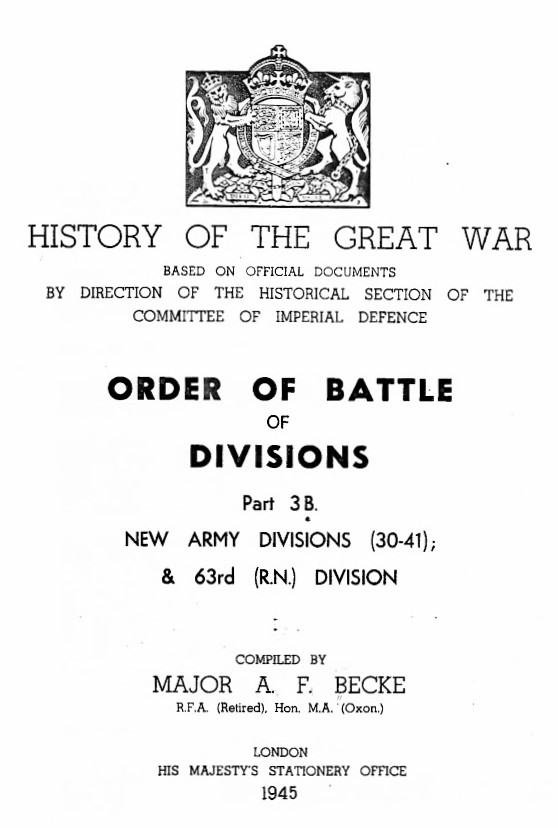
32nd Division Order of Battle (cover) (1)
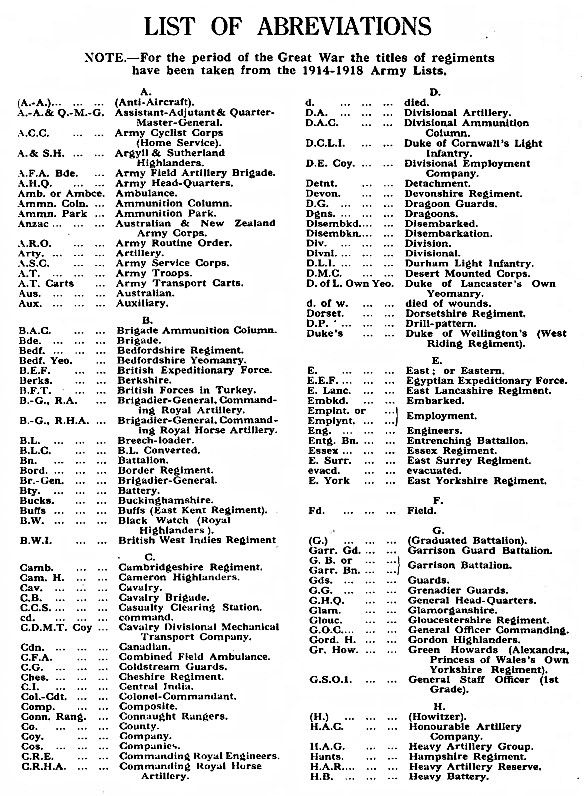
32nd Division Order of Battle (2)
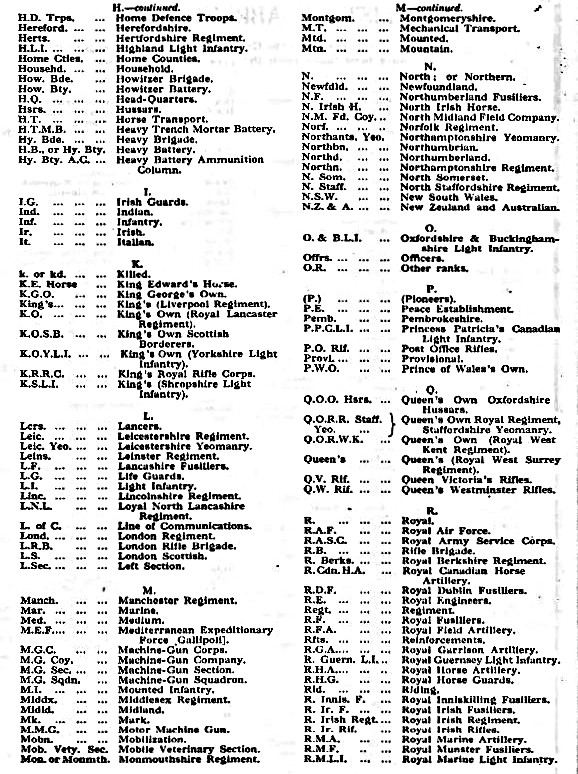
32nd Division Order of Battle (3)
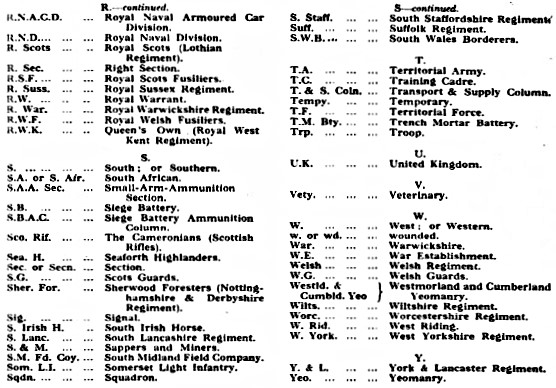
32nd Division Order of Battle (4)
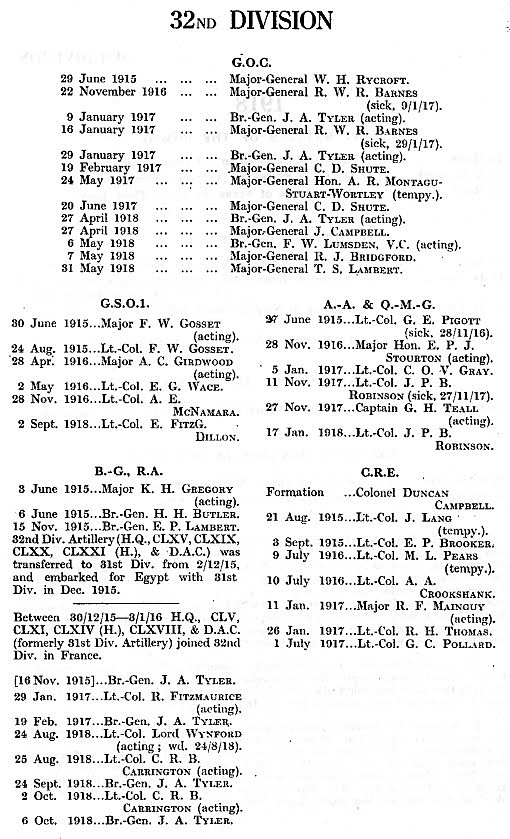
32nd Division Order of Battle (5)
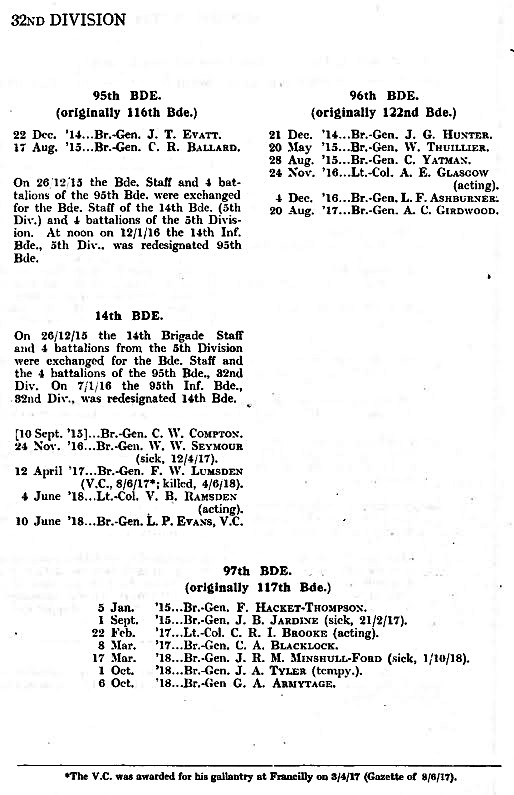
32nd Division Order of Battle (6)
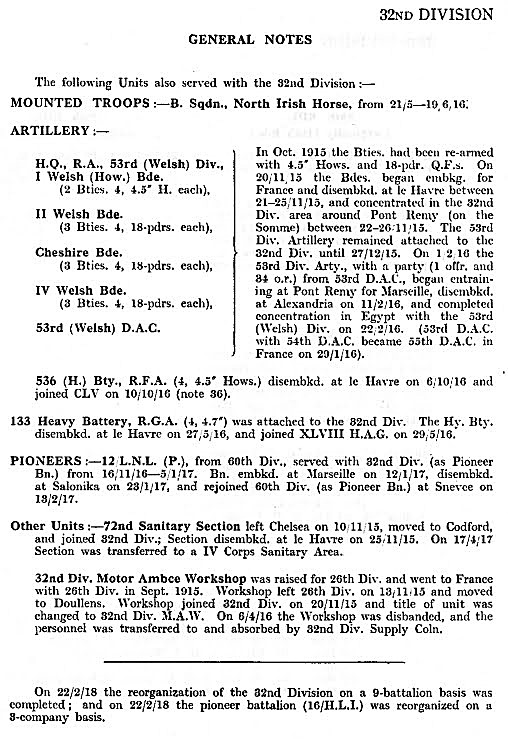
32nd Division Order of Battle (7)
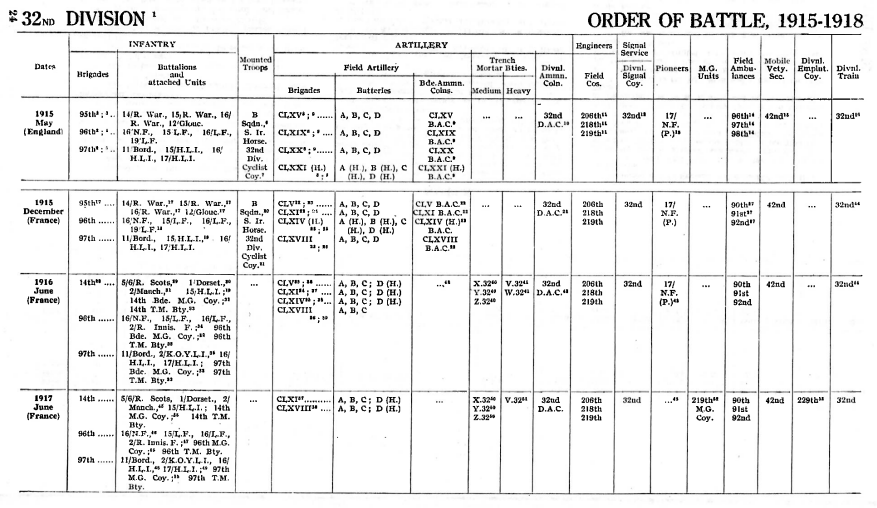
32nd Division Order of Battle (8)
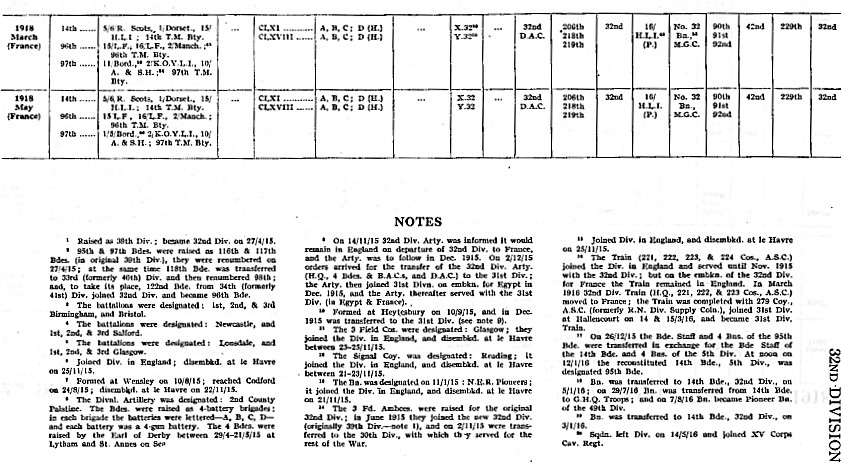
32nd Division Order of Battle (9)
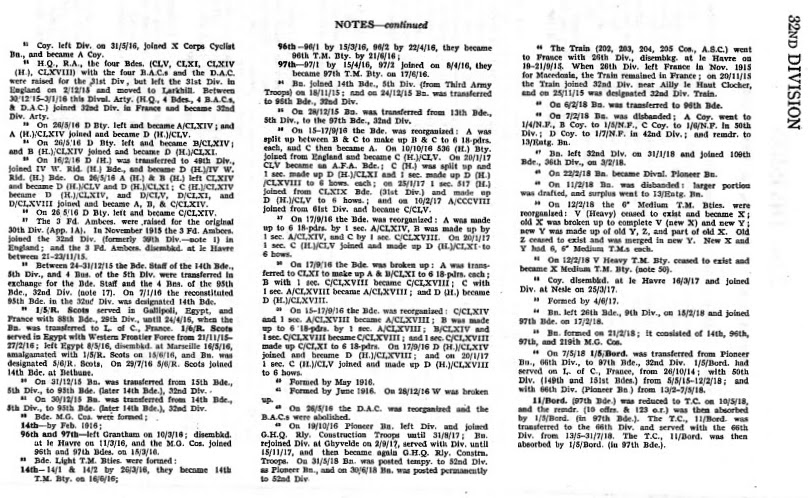
32nd Division Order of Battle (10)
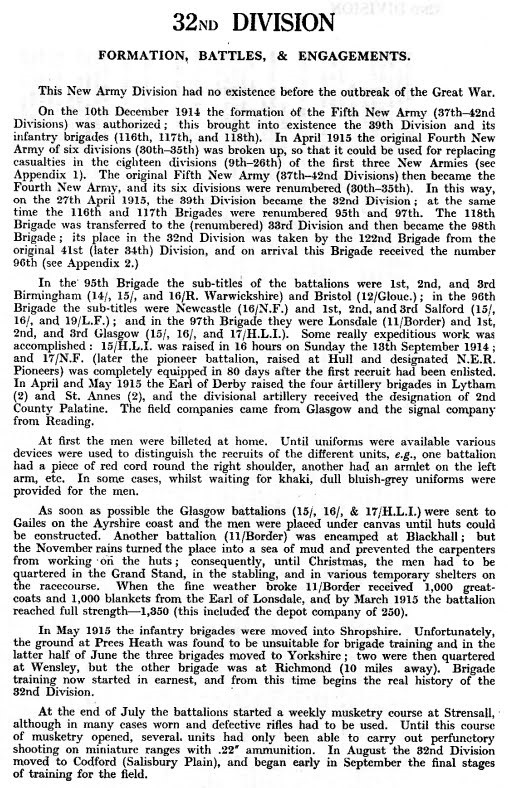
32nd Division Order of Battle (11)
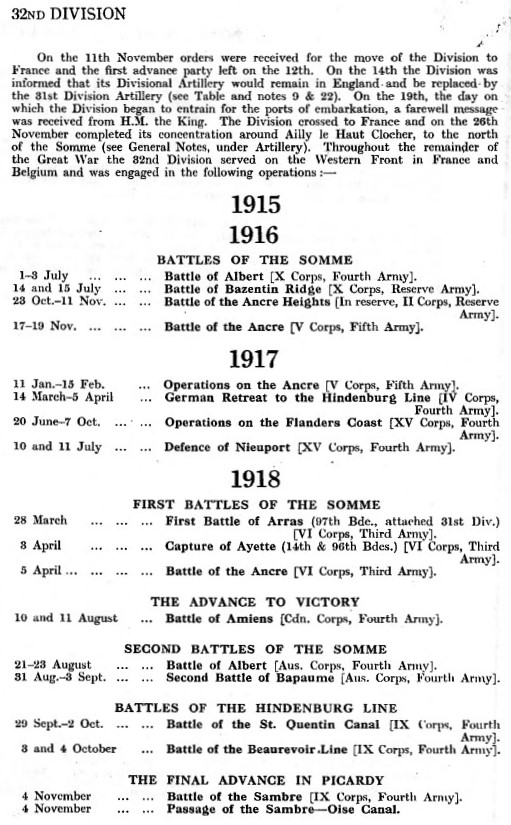
32nd Division Order of Battle (12)
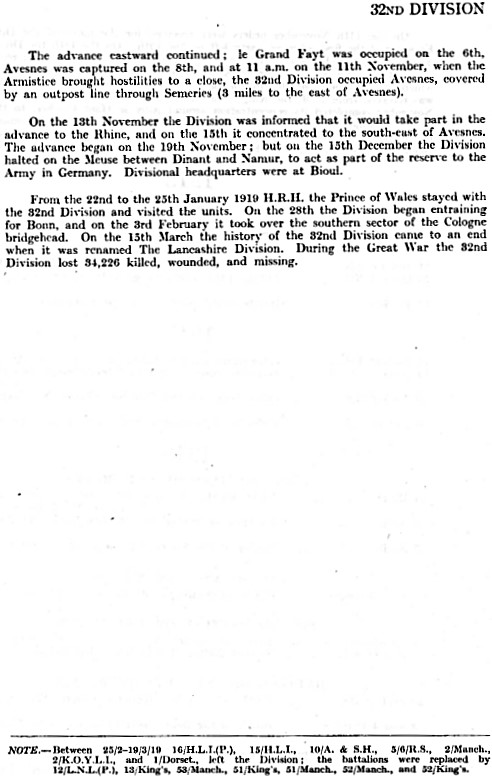
32nd Division Order of Battle (13)
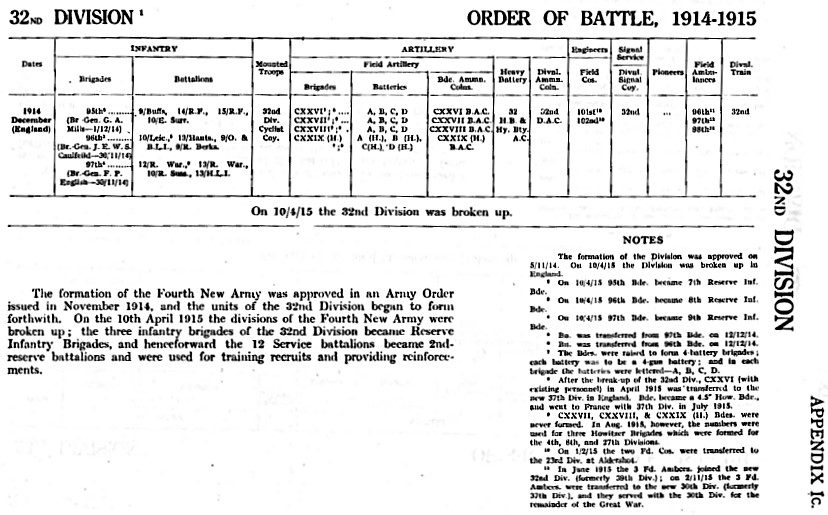
32nd Division Order of Battle (14)